Kia ora koutou
Welcome to our January 2026 newsletter.
Its 6 months since the start of our 2025-2026 hut and track programmes. Weather was not too bad initially, and we made some good progress with the track program. But lately our effort has slowed down, mainly of projects that are remote and need helicopter transport. And also a good weather window is needed to do the all planned work.
Its 36 years since the predeccessor to the GWBN (Tararua Aorangi Huts Committee – TAHC) was formed. The TAHC was the first volunteer group that took on large scale maintenance of huts in Aotearoa. All 15 of the clubs that managed huts in the forest parks became members. Using the funding from hut fees we managed to also build three key huts. With the support of the backcountry community the GWBN should continue for another 38 years.
The enthusiasm and effort our members who have volunteered to help with our track and hut programmes continues to be inspiring. Working on the likes of clearing tracks in the Tararua range is never easy, and the teams have had some long hard days and slow walks back to the hut (or the carpark) in the evening. They can be proud that they are certainly “Making a Difference”.
DOC Wairarapa staff continue to give great support to our programmes. And we have both managed to make savings by DOC/GWBN co-ordiination of logistics etc.
Our Caring for our Huts initiative has got underway, following a trial to assess if the initiative would be successful. The support from clubs and individuals in helping fund and also get buckets of cleaning materials into the 50 huts has been fantastic.
The generocity of the backcountry community has been amazing, with individuals making donations, and also clubs. Our business sponsors and charitable groups helping our work also continue to support our work.
This year, we will need to raise about 60 percent of funding for our hut and track program from donations and charitable applications.
Nga mihi nui
Derrick Field – Chair GWBN
Membership and Volunteers
We now have 330 members of the GWBN. A total of 270 have indicated they are interested in volunteering for the GWBN. Over the last 6 months, 31 GWBN volunteers have spent 78 days doing 2200 hours of mahi on mainly tracks in the forest parks. Average time in the backcountry actually clearing tracks is 70 hours for each volunteer. A fantastic effort by everyone.
Huts
No major hut projects are planned this year. A team spent a few days at Maungahuka doing minor repairs and giving the hut a good clean, inside and out. The DOC Wairarapa team have done quite a bit of repairs to huts during their backcountry work.
Tent sites built at Dracophyllum and Nichols huts appear to be getting used. Especially at Nichols. This hut is the key goal for Te Araroa walkers leaving Te Matawai or Waiopehu. Or Waitewaewae. Consequently overcrowding is still an issue.
Dracophyllum hut Replacement; The Backcountry Trust have a bequeathment that will see a 12 bed booked hut at Dracophyllum, to repalce the existing 2 bed “bivvy” that had deterioated at the site.
Tracks
Some of the tracks completed in the latter half of last year included Mountain House – Powell and Atiwhakatu, Pakihore Ridge – Penn Creek, Table Top, Maymorn to Kapakapanui and Old Mill track in Aorangi, jointly with the Aorangi Restoration Trust.
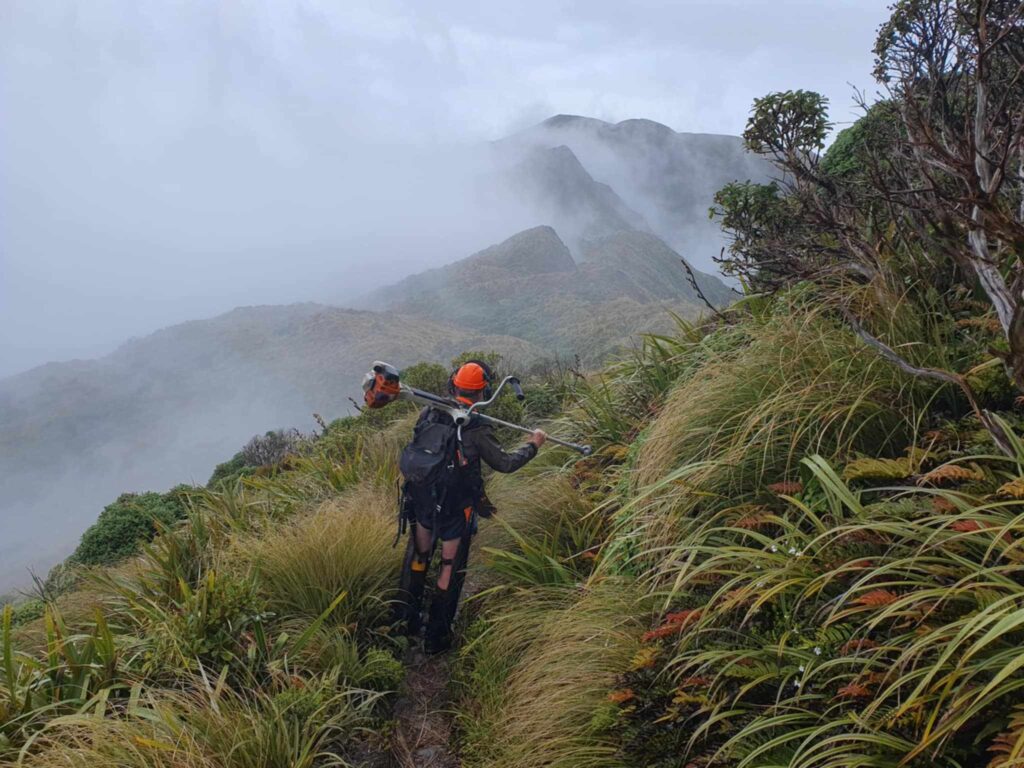
The track program for this year got off to a good start. Clearing of 26 tracks has been done. with nearly all clearing completed. Wet weather lately has delayed our backcountry track work. During the next few months we are looking to recut tracks in the Tauwharenikau valley, Mitre Flats and also at South Ohau including Gable End. (Photo – climbing Dennan to start cutting. Photo A Barr)
It is anticipated track clearing will total 200 kilometres by end June 2026.
Ohau Access; In the Ohau valley, DOC have issued warnings about slips on the Ohau valley track to the old hut site. The track provides essential access into the valley to get to North Ohau and South Ohau huts. And beyound. The valley is also popular for day tramps. We are seeking approval to improve the bypass track formed when the slips first occured, so that users can get into the valley safetly.
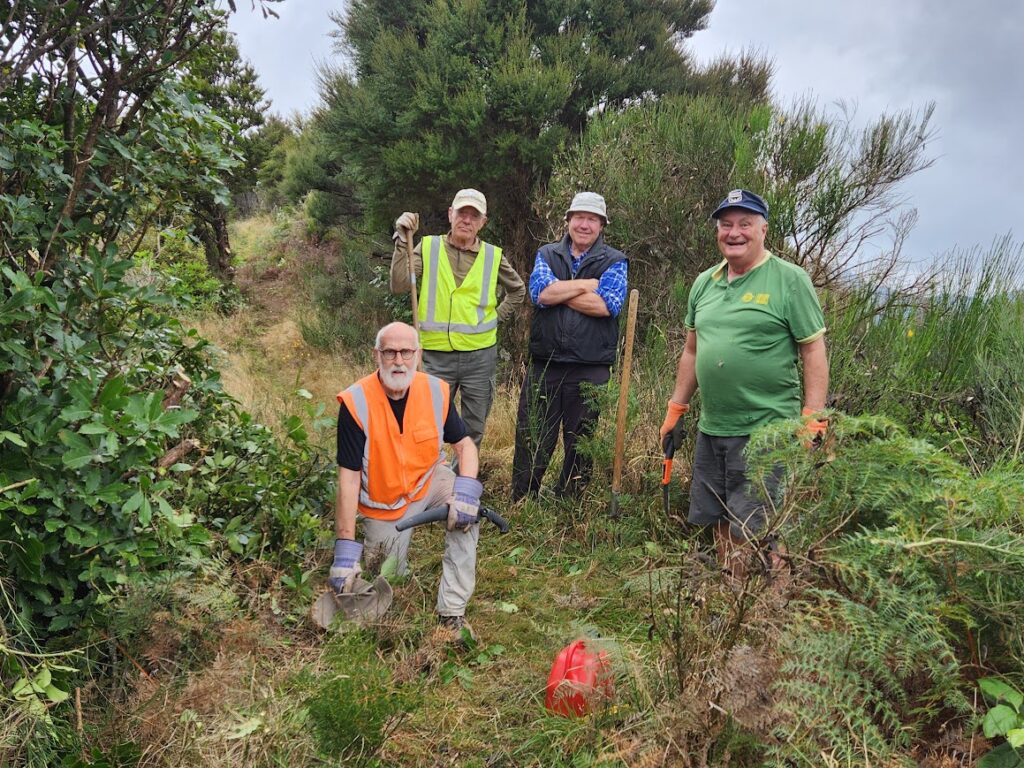
Track clearing included finishing the Old Mill track with theAorangi Restoration Trust and the northern section of the Aorangi Crossing (funded by the Aorangi Restoration Trust), Led by Joe Howells, the ART team have often been with us on our Aorangi track work. Lots of long days and the hard plods back to the carpark. (Photo; the Aorangi Trust team, after a days work on the Old Mill track).
The Aorangi Trust team are also helping recut the gorse and Spanish Heath section of the track from te Kopi to Washpool hut.
Other tracks were Walls Whare – Totara Flats- Totara Creek, Waiotauru, Atiwhakatu and Jumbo to Upper Atiwhakatu. Plus a number of roadend tracks, including Remutaka Summit, Maingatainoka, Puffer/Dobsons. With the high winds experienced, a number of tracks suffered from windfalls. Time was spent clearing these tracks, including Smiths Creek, Barra, Atiwhakatu and Mikimiki tracks.
Our track program is now at ther stage where repeat cutting is needed on some tracks. Most remote tracks will be cut at 4 yearly intervals. But tracks with quicker regrowth and more users can be yearly to 3 yearly. Now that we have almost caught up with the “deferred maintenance” of the track network, ongoing recutting is expected to be easier.
Total cost of track work last year was $270/kilometre. The direct cost to DOC (DOC and Backcountry Trust funding only) was 105/kilometre.
Over the last 2.5 years, it has taken 7400 hours to complete 370 kilometres of track. This equates to 20 hours to clear 1 kilometre of track.
During the winter, a week was spent in Whanganui National Park, doing a recut of the eastern section of the Matemateonga track on behalf of DOC Whanganui. This is the third winter trip to the Matemateonga and Waitotara. While the hills were not as steep, the team still had some long walks.
Training & Certification
Over the last 3 years, certification for use of chainsaws has been ongoing. So far we have 12 GWBN members who are certified for chainsaw use in the forest parks. Certification involves a 2 day course to attain the basic level of chainsaw use. David Lyttle is our latest member to get certified. A current First Aid certificate is also required.
A “Track Maintenance Guidlines” manual has been prepared, to help keep track clearing to the required standards.
Caring for out Huts
Results so far are promising, with cleaning materials being used by huts users and cleanliness seems to have improved. Our GWBN committee Secretary Andrew Pilcher has had his hands full liaising with clubs and individuals to get buckets into huts, and also start looking at refills. We are hoping hut users “do their bit” and use the cleaning material to clean up before leaving huts. Preventing mould from accumalating is critical in backcountry huts, especially huts at the bushline or above. Mattresses especially need regular cleaning, so that using them is safe.
Letting us know when buckets need topping up, and getting materials into the huts will be ongoing and we will need help to do to this.

The team from the Mt Cook Tramping Club (Northern) did the long tramp through the Aorangi Crossing. With a bit of extra to carry, two orange Mitre 10 buckets full of cleaning material destined for Washpool and Pararaki huts. We have had great spport for some Wellington tramping clubs. Wellington Tramping and Mountaineering , Tararua and Victoria University tramping clubs have helped raise funds for the supply of cleaning material, also along with Hutt Valley TC. (Photo the Mt Cook TC team with buckets at the start.)
Funding and Sponsors
The last 12 months has seen a lot of funding support for our voluntary work in the forest parks.
This has included clubs donating funding (HVTC, TTC, VUWTC, WT&MC and NZDA Wellington) by fund rasing events including a great Quiz night. Some Victoria University Club members even spent all day (and night) running up and down Mt Victoria to help raise funds for the GWBN.
The Aorangi Restopration Trust, led by Joe Howells have not only worked hard on the Aorangi tracks with us, but also generously funded helicopter hire for the cutting of the Aorangi Crossing route.
Pat and John Tristram donated a new Stihl chainsaw for use on our track program and Bogan State donated his Stihl 461 scrub cutter to help with our track work.
Bill and Kayla of Cold Air Helicopters donated free flying time for our Maungahuka project.
Stihl Shop Masterton continue to provide equipment at reduced prices, and we also have a trade account with Place Makers Masterton
Trust House Foundation and also the Carterton District Council have continued to provide grant funding that has enabled track work to happen.
Donations from individuals continue to be generously provided. Which are also needed so we can have a full maintenance program. A major donation by Margaret Aitken enabled the Dorset Ridge hut renovations and also our ongoing track program.
DOC Wairarapa and the Backcountry Trust continue to support our maintenance programmes
Thanks to everyone who helped. We could not do it without you.

The Greater Wellington Backcountry Network is supported by








This newsletter is published by the Greater Wellington Backcountry Network Inc. To contact us, email is info@tarhc.org.nz